The Tour
of Tours
Fifty years of concert touring, told from the loading dock. The idea came out of working IATSE calls. Standing on a dock at six in the morning watching a stadium show arrive in pieces is a better story than anything that happens after doors, and nobody had built the exhibit for it. Concept, exhibit design, layout, 3D and renderings.
The problem
The Tour of Tours is a proposed exhibit tracing how live music production grew from a van and a few Marshall stacks into the largest traveling structures on earth. It runs from the late 60s, Cream's farewell run and the first arena rock tours, through to the TAIT-built spectacles behind Beyonce, Taylor Swift and the Red Hot Chili Peppers.
Proposed as a partnership between the Rock Hall, IATSE and the major touring vendors. Developed during the Pratt Exhibition Design Intensive.
Build the exhibit out of the thing it is about
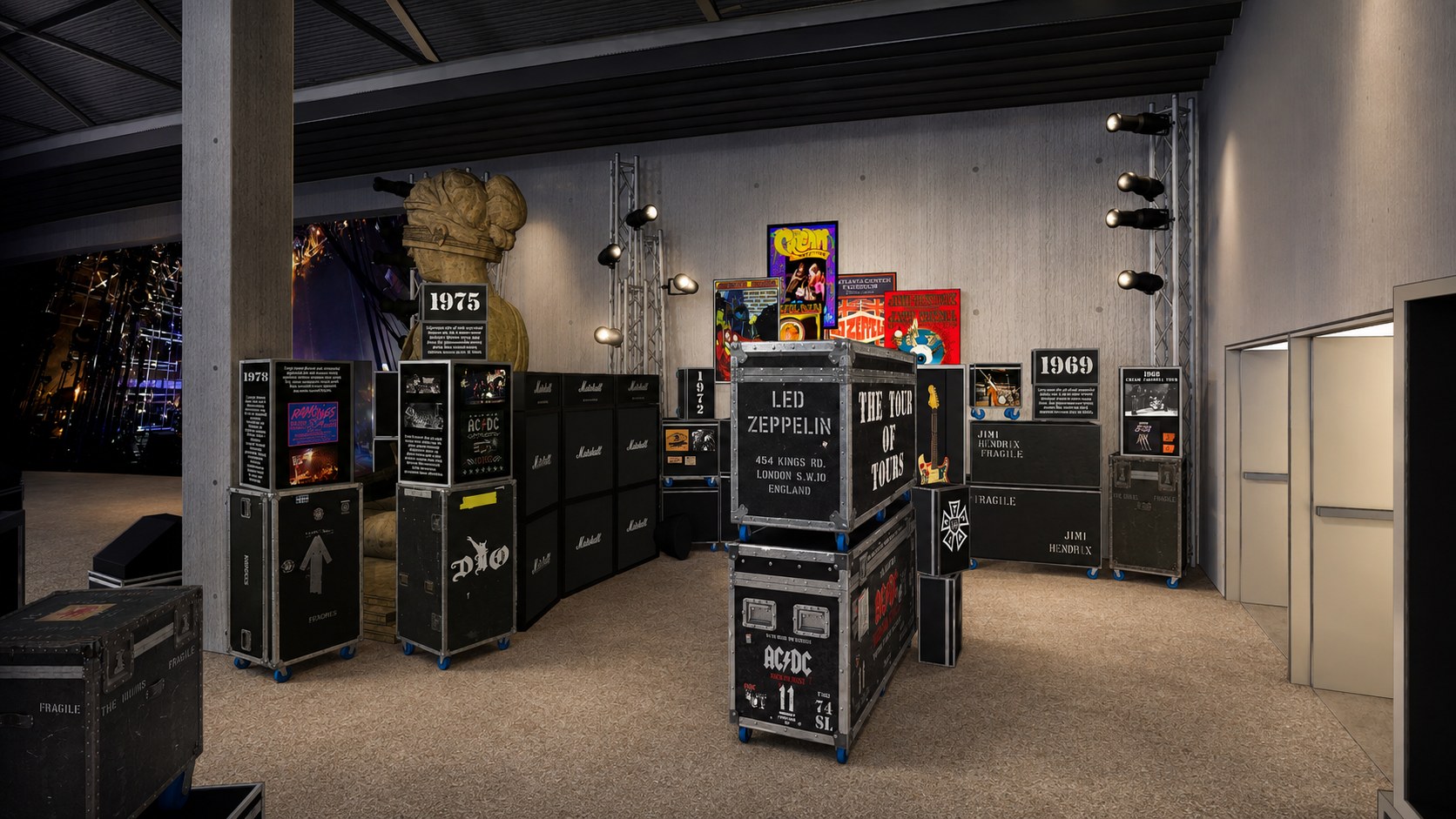
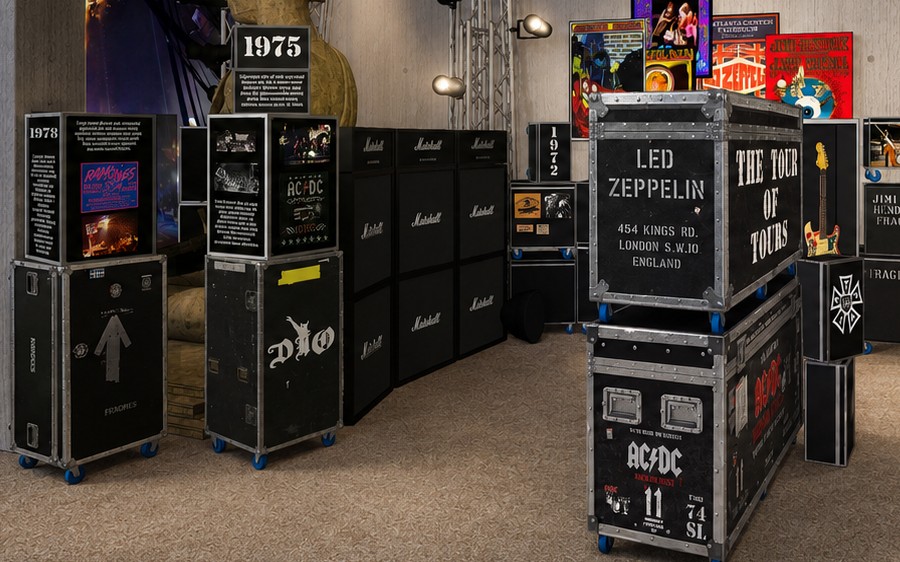
Every case, plinth, bench and label carrier in the show is a road case. Real ones, with real tour markings, stencil layers, shipping arrows and local bugs still stuck to the lids. Visitors walk a timeline that is physically assembled from the touring industry's own hardware. Nothing gets sanitized into a clean white display case. The infrastructure is the artifact.
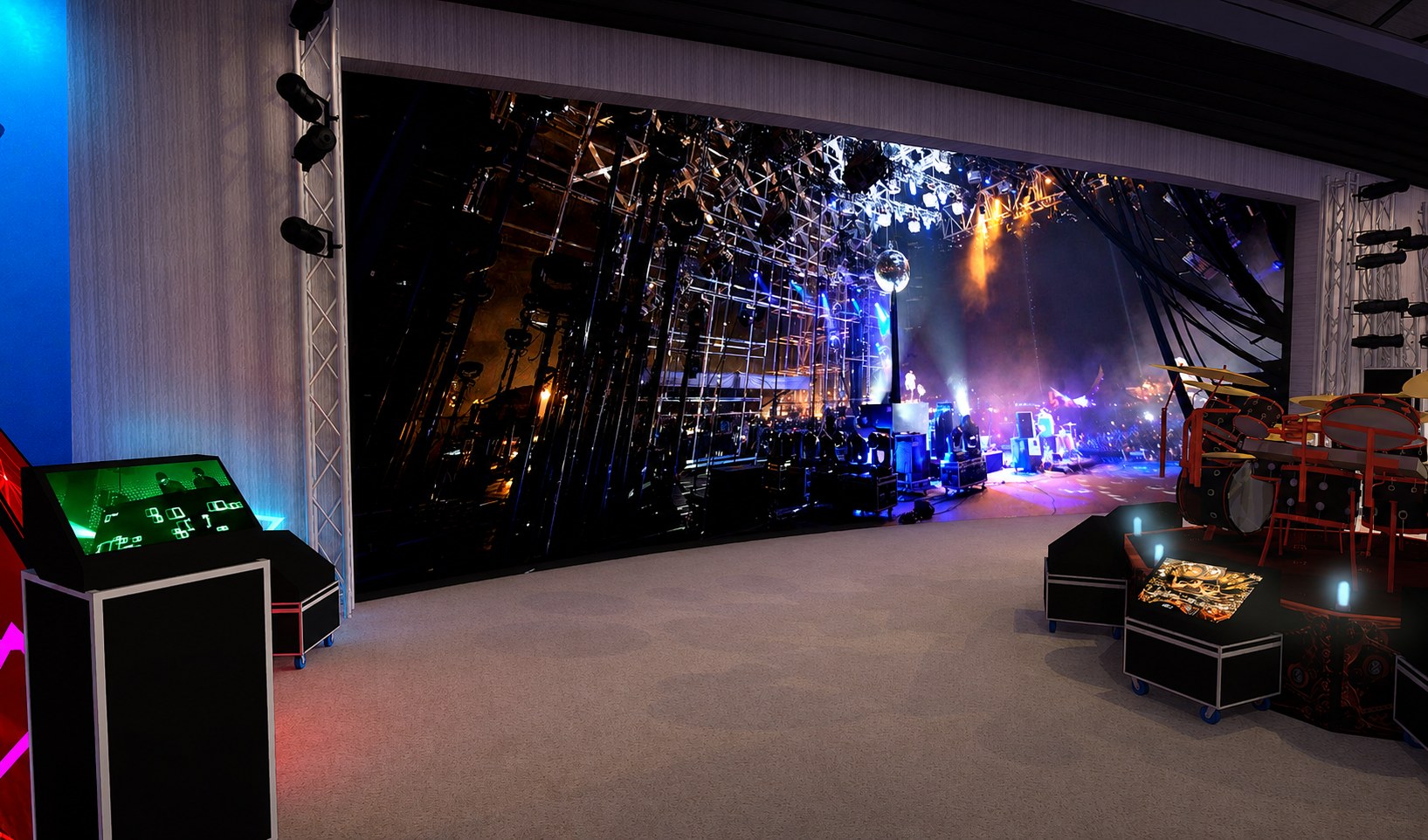
The room around it commits to the same premise. Board formed concrete, exposed steel, cable raceways overhead, truss towers, roll up doors down one wall, work light color temperature. The far end opens onto the stadium itself, which is a large format screen running a continuous time lapse: trucks arriving, steel going up, the show at full tilt, then load out and an empty bowl by sunrise. It gives the room a horizon and a clock. Wherever you are standing in the timeline, the load in is always happening behind you.
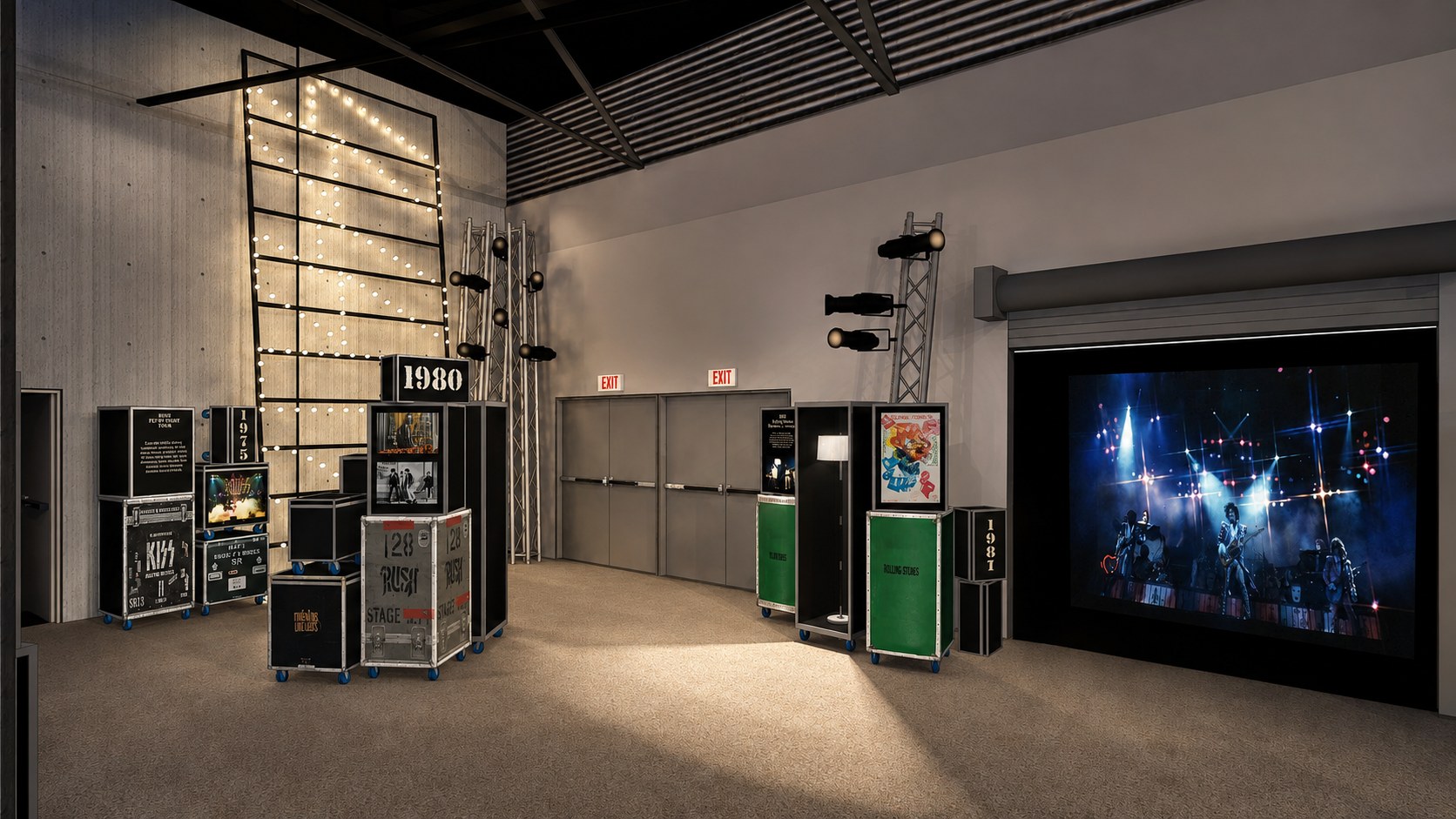
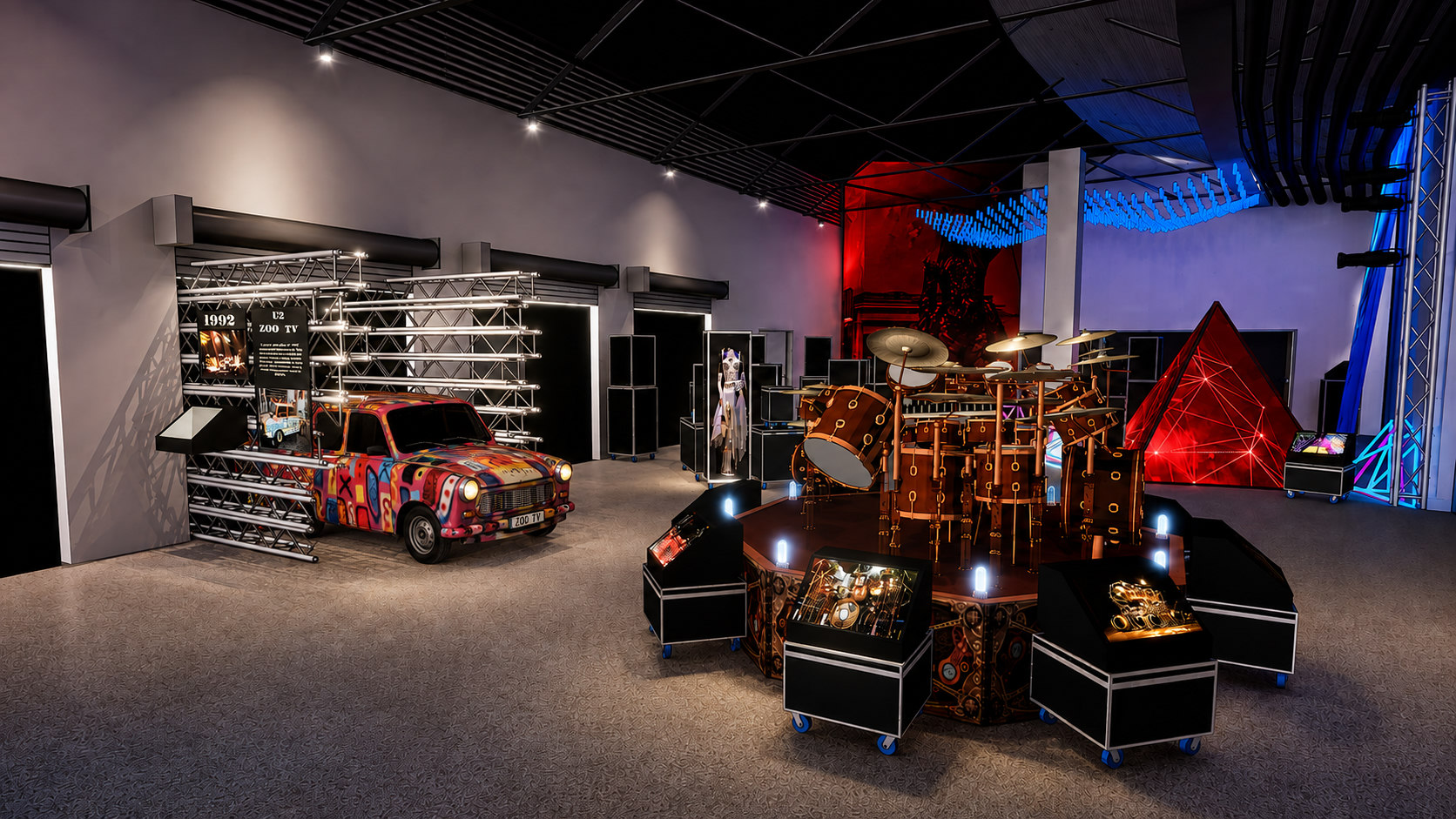
You can see the industry scale up by counting the boxes
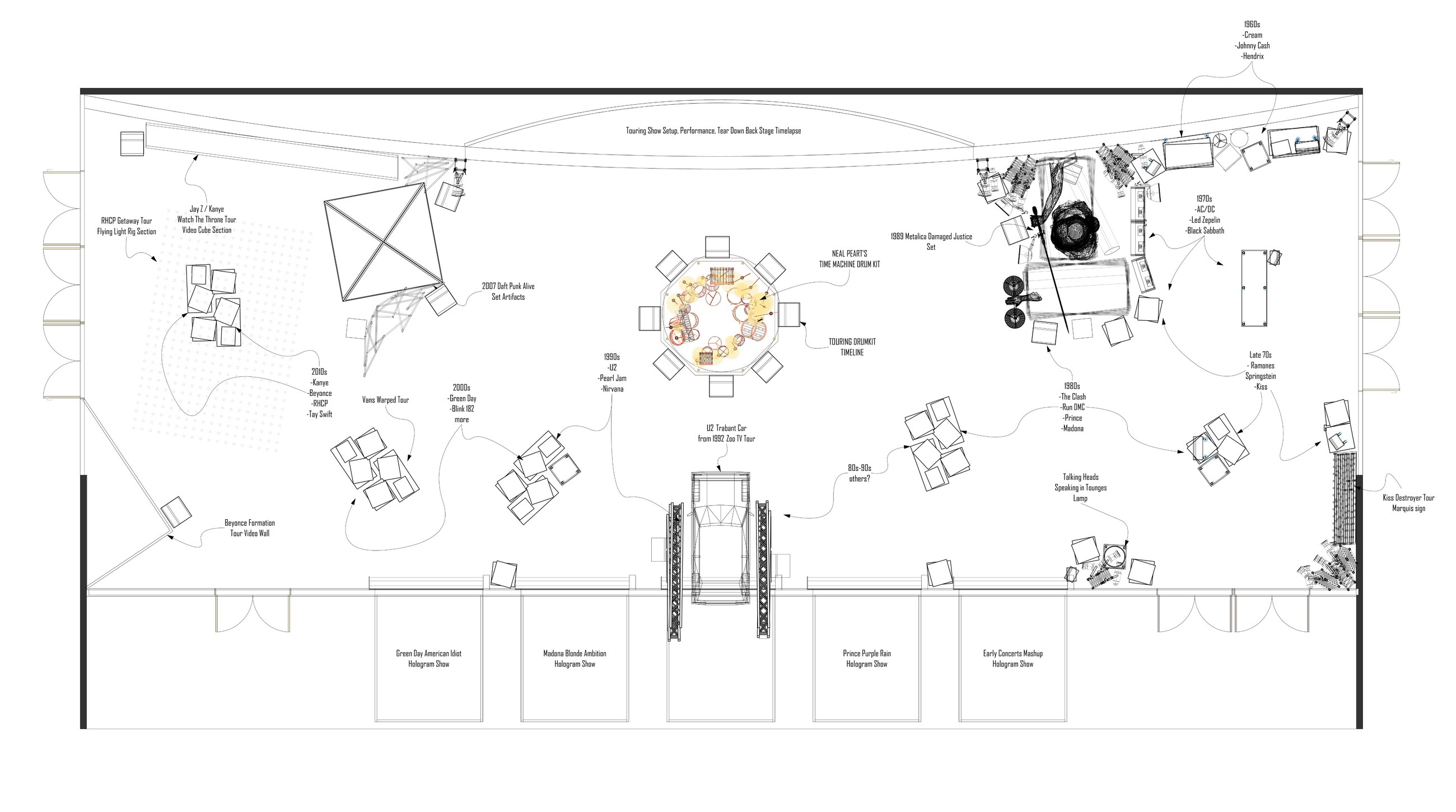
The timeline runs the perimeter, decade by decade, stacked in cases sized to the era. Late sixties and seventies gets Cream, Hendrix, Johnny Cash, Led Zeppelin, AC/DC and Black Sabbath: short stacks, Marshall walls, hand painted trunks. The late seventies and eighties bring Ramones, Springsteen, Kiss, Rush, The Clash, Prince, Madonna and Run DMC, and the piles get taller. The nineties are the scale break, when video enters the show. The two thousands and twenty tens hand the floor over to LED, automation and flying rigs.
The physical density does the storytelling. No graphic panel has to explain that touring got bigger: at some point you stop counting the gear by the case load and start counting it by the truck load.
Five roll up doors that open onto a concert
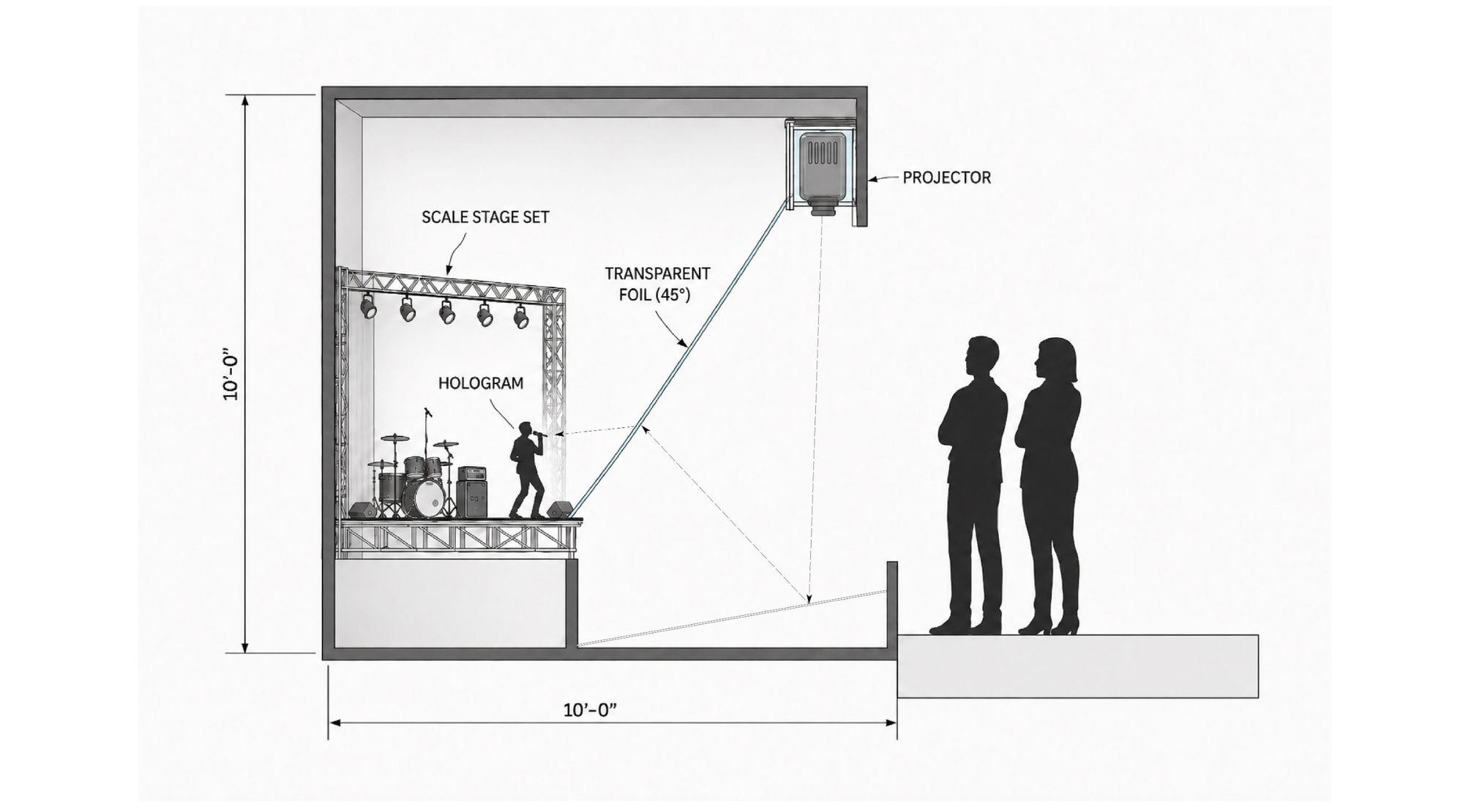
The dock doors along one wall are shadow box theaters. Behind each is a scale replica of a stage with a sheet of glass set at forty five degrees, running a modified Pepper's ghost hologram so the band appears to be performing on the miniature stage in front of you. Green Day's American Idiot, Madonna's Blonde Ambition, Prince's Purple Rain and an early concerts mashup.
Small, dark and repeatable. No scheduled theater, no queue, no seating to service. Something is always playing, and the doors pull traffic off the timeline wall, which is the pinch point in any chronological show.
Three things worth crossing the floor for
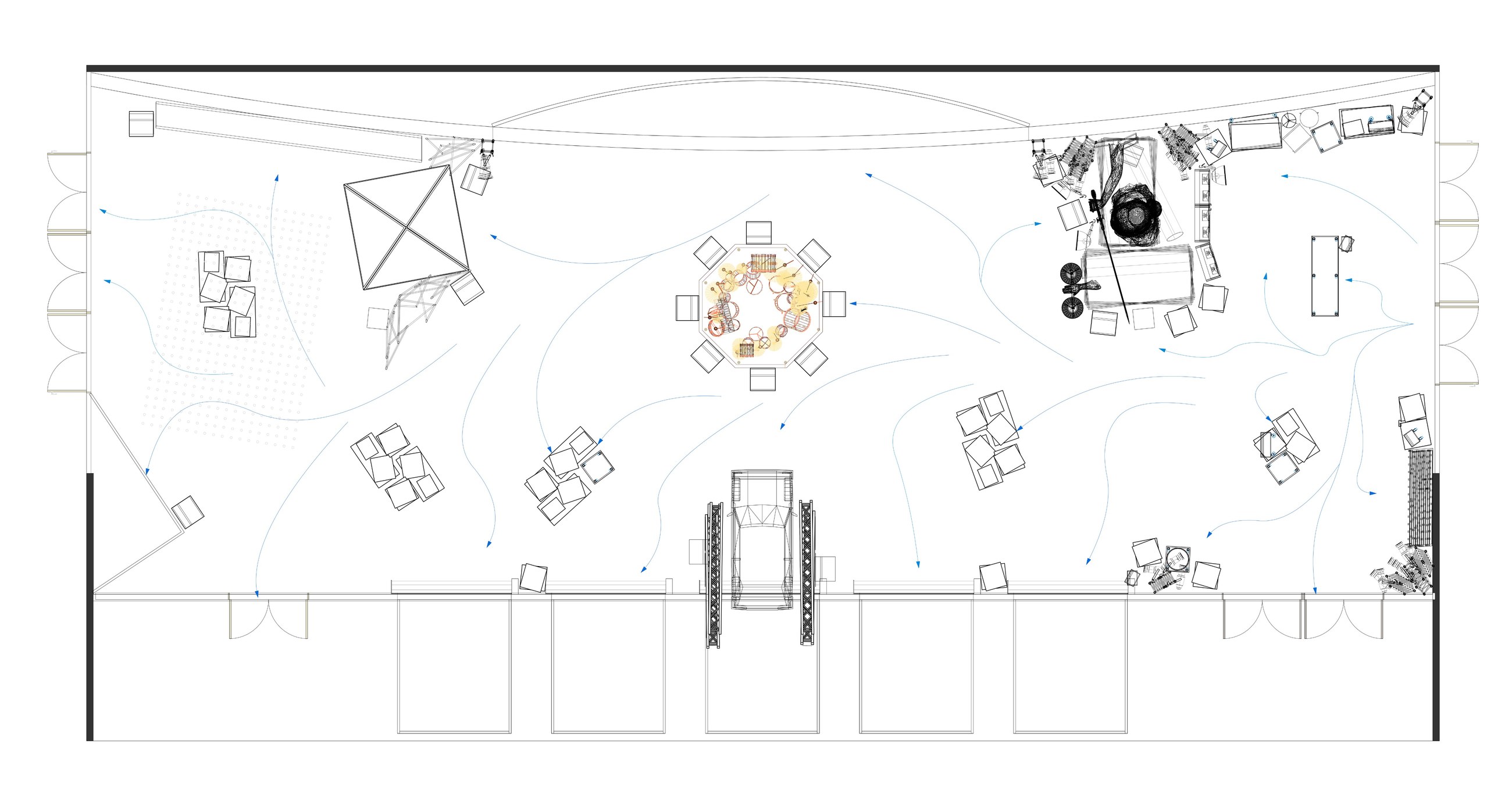
A perimeter timeline makes people walk single file. The center of the plan holds three large objects that are visible from anywhere in the room, so traffic keeps cutting across the middle instead of grinding along one wall.
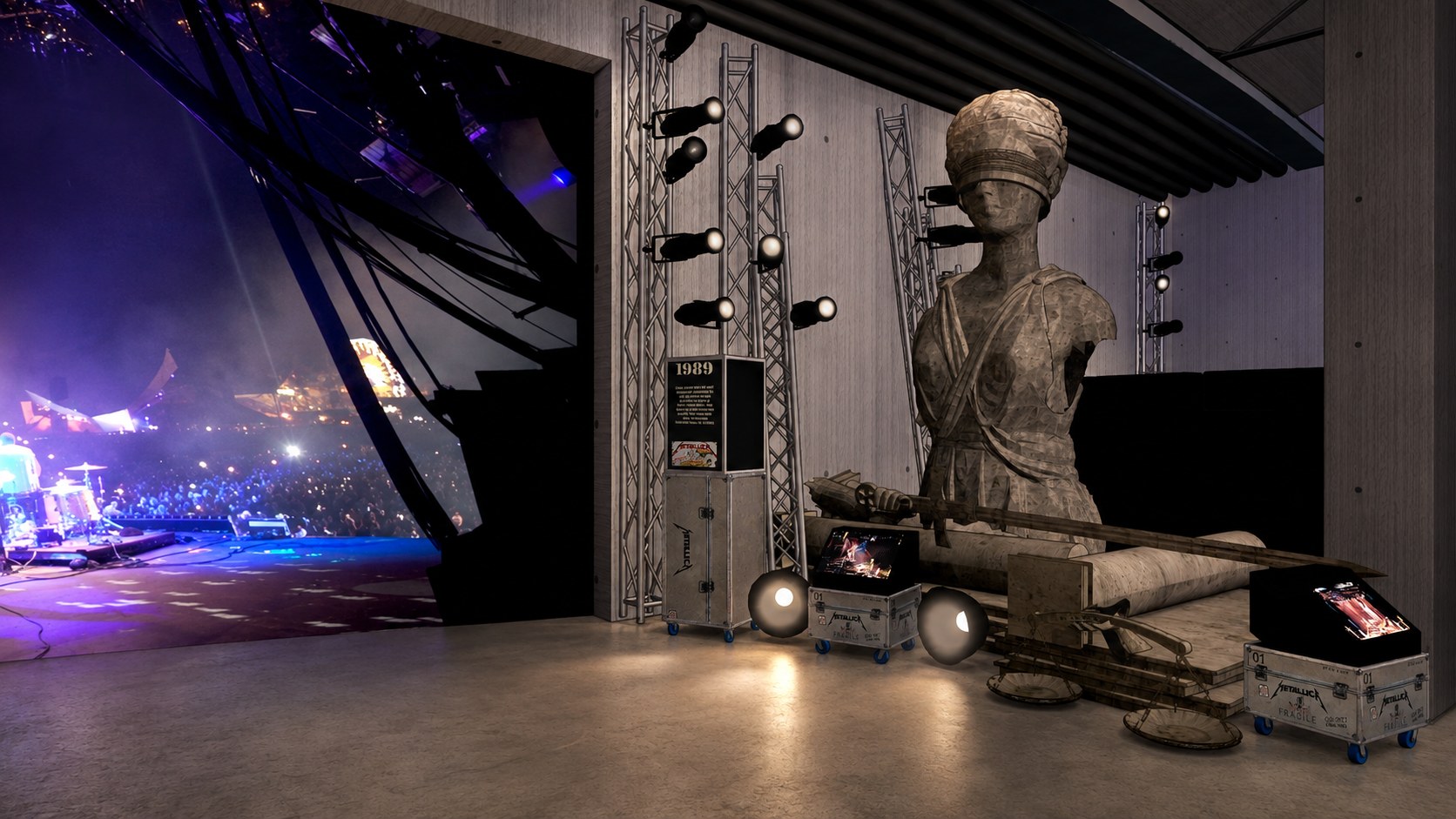
A forty foot statue that fits in a truck
The Lady Justice set piece from Metallica's 1989 tour, shown deliberately broken into its shipping sections with the seams left exposed. The panel here is about how something that size gets engineered to come apart, hit a truck pack, and go back together in four hours. This is the fabrication story the whole exhibit is built around, and the reason the seams are the display rather than a thing to hide.
The car and the drum kit
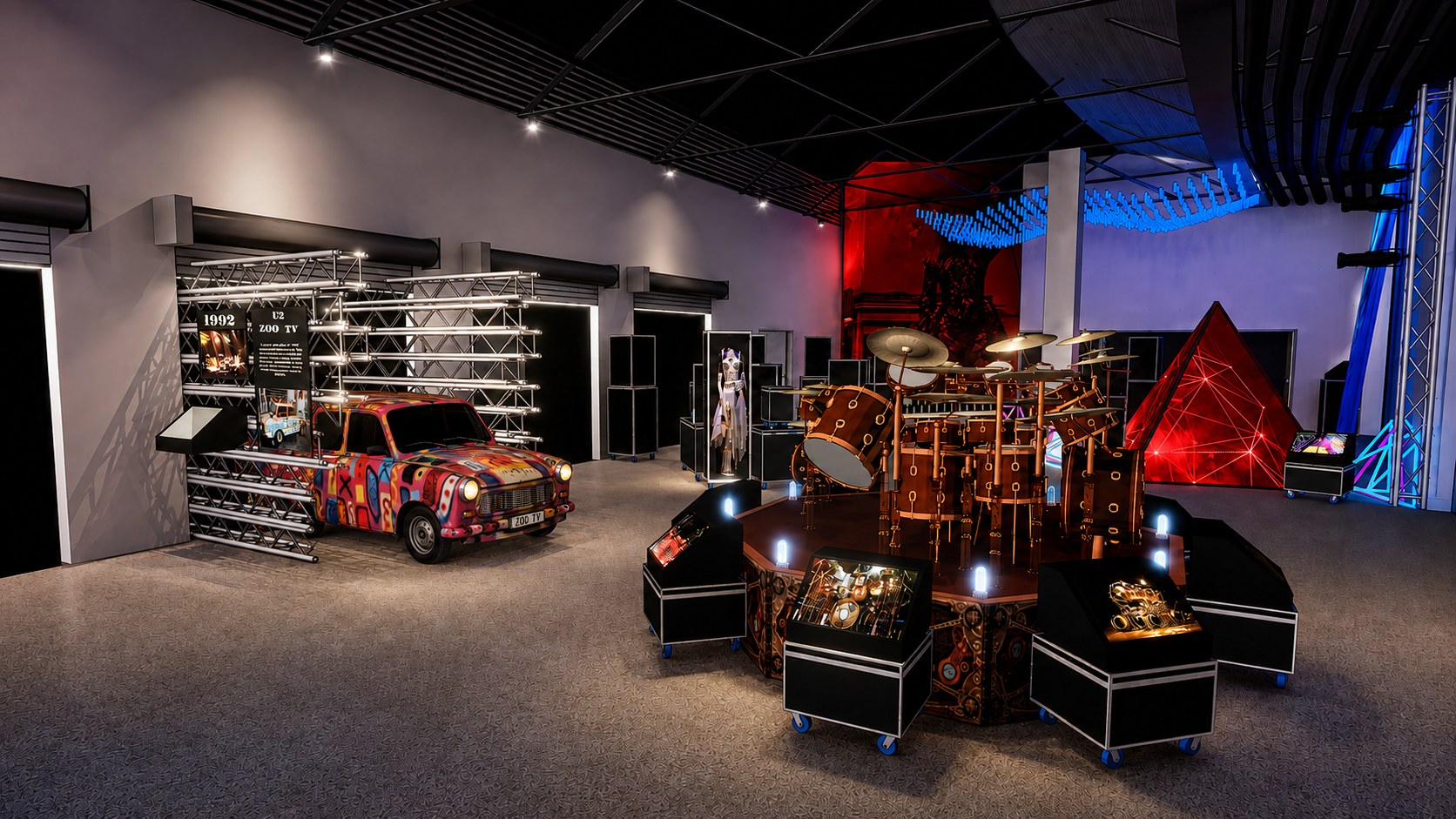
U2's Zoo TV Trabant hangs in truss at the center of the floor. It is the single best object for explaining the moment a tour stopped being a concert and became a produced media event.
Across from it, Neil Peart's Time Machine kit sits on a raised platform, open on all sides, ringed by a timeline of other notable kits displayed on the cases around it. Natural sponsor territory for Pearl or Zildjian, and the strongest draw in the building for the visitors who came for the gear.
Bigger and brighter
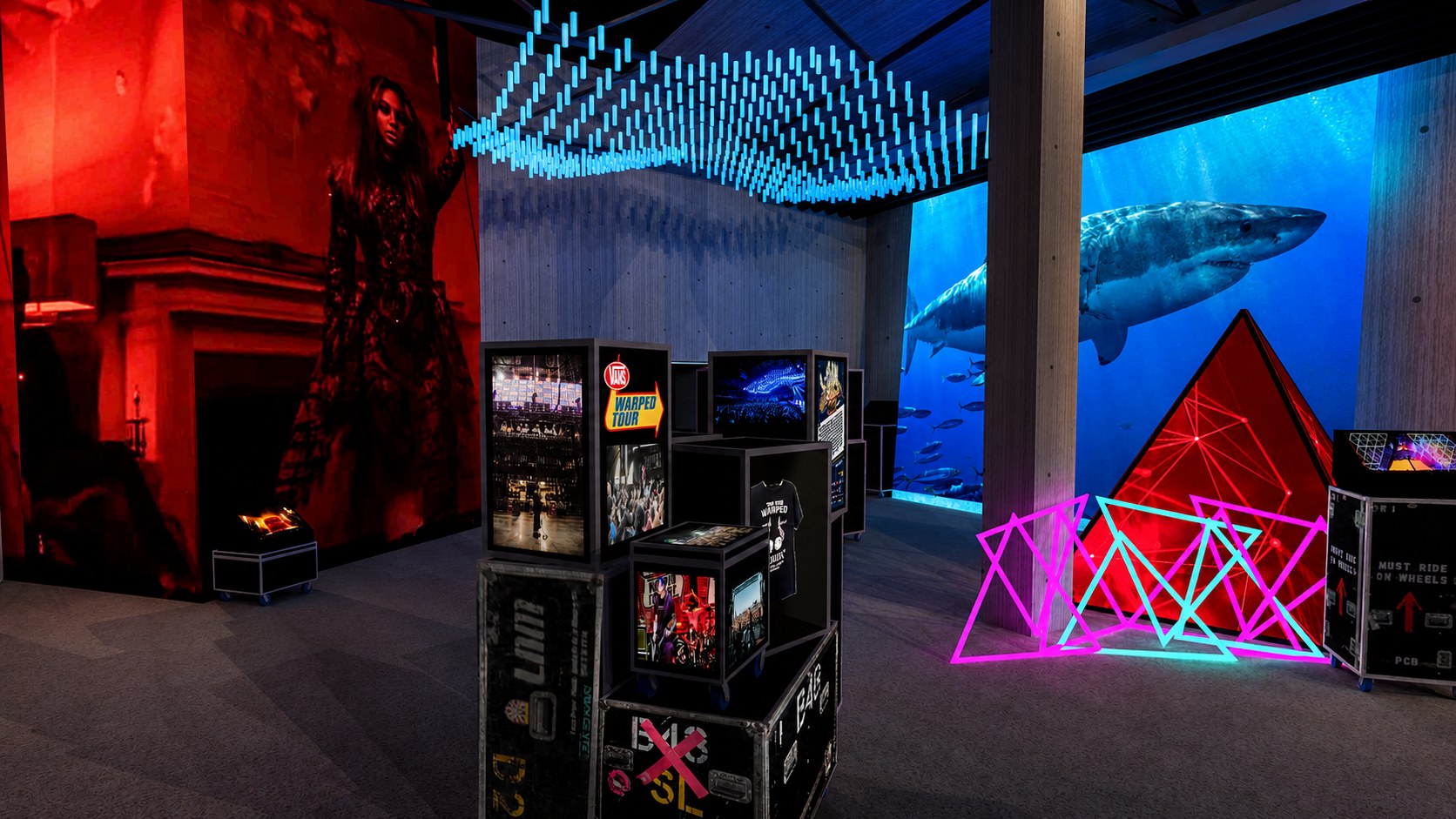
The last quarter of the room is where the road case stops being the biggest thing in the show. Three artifacts of modern scale sit together: a section of the LED wall from Beyonce's Formation tour, a working segment of the flying light rig from the Red Hot Chili Peppers Getaway tour that travels up and down on a cue, and an LED pyramid section from Daft Punk's 2007 Alive tour.
The Vans Warped Tour cluster sits just before it, which sets up the contrast neatly. One is a fleet of vans and a parking lot. The other is a lighting rig that flies.
A loop with a strong center
Visitors enter at the sixties end, work the perimeter chronologically, and cut through the middle for the anchor objects. The dock doors act as pressure release along the south wall. The center objects break up the single file behavior that a wall mounted timeline creates, and give the room a set of destinations that read from the door.